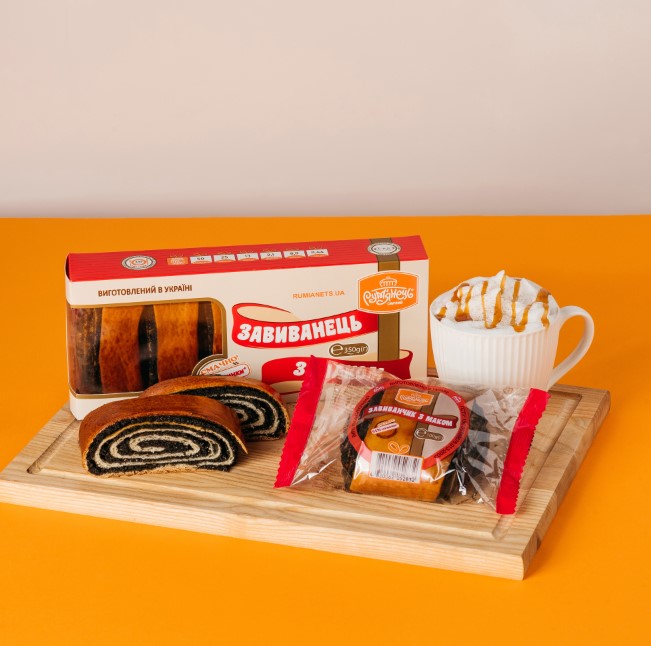
The Art of Creating Flavour: Inside the Work of a Senior Pastry Chef
The profession of a pastry chef at an industrial baking facility goes far beyond simply mixing dough or baking sweet pastries. It is a combination of strict technological discipline, a keen sense of the product, and the ability to lead a team in a continuous production rhythm. The senior pastry chef is responsible for every stage: from checking the temperature of raw ingredients to supervising the packaging of finished goods that subsequently reach tables across Ukraine and even abroad. We spoke with a senior production pastry chef about what goes on behind the scenes in the sweet pastry workshop, the secrets of croissants, and working during air raid alerts.
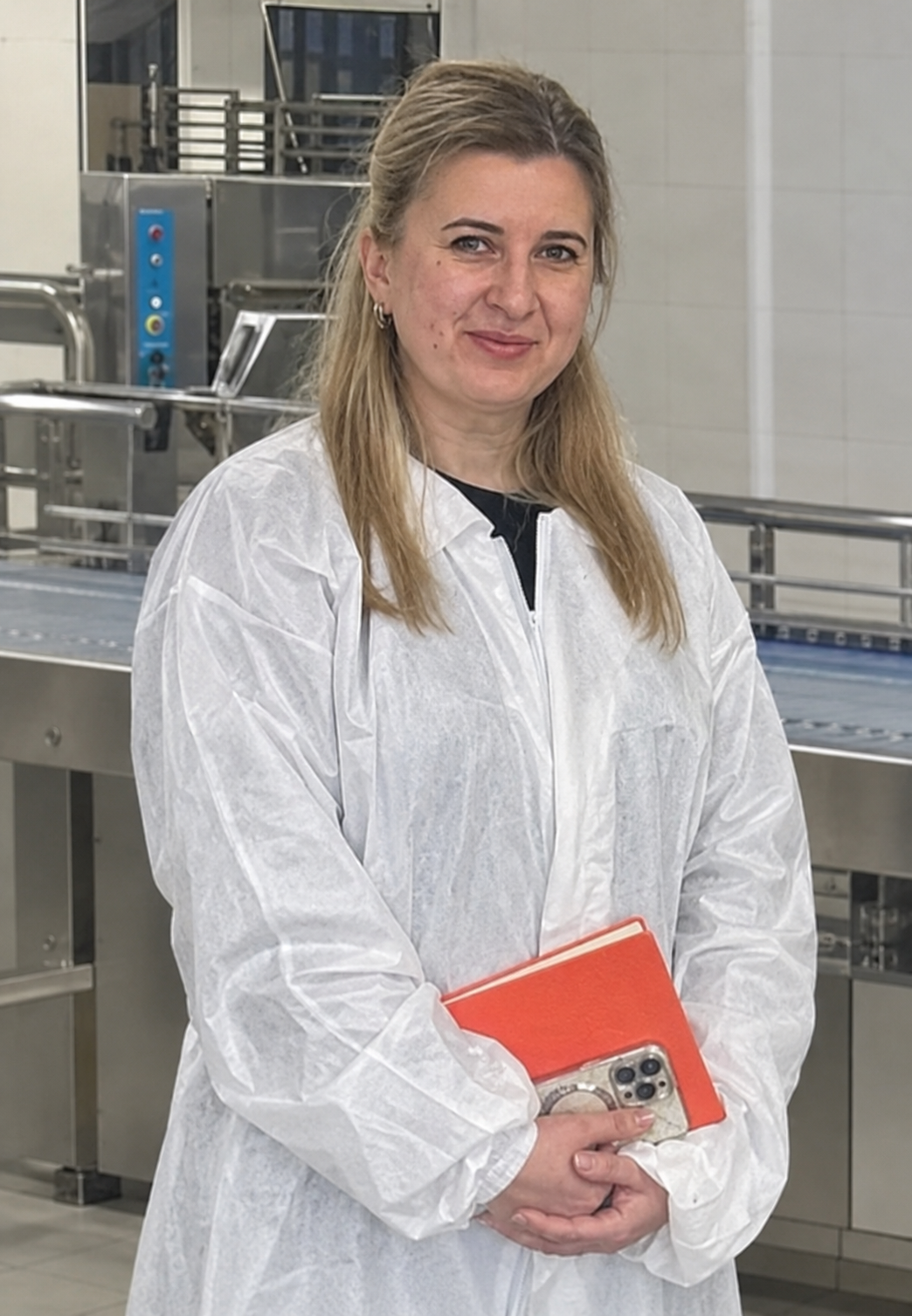
— Your job combines professional culinary skills with team management. How does a typical shift unfold, and what are your responsibilities from start to finish?
My day shift runs from eight in the morning until eight in the evening. The working day begins with a thorough inspection: I check the cleanliness of the workshop and ensure the staff are ready to work. It is crucial that everyone is wearing neat workwear, no jewellery, and looks healthy. I also assess the condition of raw materials and semi-finished products both visually and by smell, checking the fillings prepared by the previous shift to speed up the process.
After that, the operators and I check that the equipment is in working order. Once we receive the orders, I draw up a production request and distribute tasks among the team so that we meet our target by the end of the day. Throughout the entire shift, I monitor the technology: mixing the dough and fillings, timely proofing, and baking. Everything needs to be packaged promptly so that the products leave for our customers on time during the night. At the end of the shift, I inspect the cleanliness of the workshop once again and hand over to the next supervisor, explaining what still needs to be completed.
The night shift has its own specifics. While during the day we mainly shape the products, at night we focus on filling muffins and croissants and packaging them. The key here is to get everything done on time so the items do not dry out and are dispatched completely fresh. Similarly, I monitor the quality of the dough pieces, filling dosage, and cleanliness at the end of the shift.
— The range of laminated and sweet pastries is quite diverse, from sweet rolls to savoury grissini. How do their manufacturing processes differ, and what specific details must be considered when working with different products?
Our sweet rolls and pastry swirls are shaped on a dedicated line. Here, it is critical to monitor the consistency and proper cooling of the dough, as well as the thickness of the filling. If the proportions are off, the mixture simply will not run smoothly on the line, and the product will not form properly.
Grissini are crispy breadsticks produced on the Rondo line. To achieve high quality, we must strictly control the dough cooling temperature. Muffins, on the other hand, are made from sponge batter on a completely different line that doses the mixture into baking cups. After baking, we either leave them plain or pipe various fillings into them. Croissants require the most complex process of all: first, the dough is mixed, and then it undergoes multi-layered sheeting on our large laminator.
— Puff pastry demands precision and strict adherence to technology. Which processing stages have the greatest impact on the quality and appearance of the finished product?
Our operators handle this, and the main secret lies in temperature balance. It is vital that the dough and the laminating margarine are at the exact right temperature: the margarine must be neither too hard nor too soft. Only with an ideal balance will the layers distribute evenly. After lamination, the croissant dough pieces must be chilled before moving on to the shaping line. It is a long and intricate technological chain, but the result is well worth it.
— Things do not always go according to plan in manufacturing. What are the most difficult or unexpected situations you have faced during a shift, and how did you resolve them?
Nowadays, the toughest challenges are air raid alerts. At such moments, people's safety is our absolute priority, so whenever there is a serious threat, we always go down to the shelter. At the same time, we have to act fast to save the products from spoiling: moving dough into cold storage rooms or pausing processes, because no one knows whether an alert will last five minutes or two hours.
Moreover, staff members naturally feel anxious at times. My job as a leader is to remain calm inside, because the team looks to me and follows my example. Taking this responsibility for both our people and the production line during critical moments is the hardest part of the job.
— How do you organise your team's work to ensure uninterrupted production without losing attention to the quality of every single item?
I am convinced that the key to success lies in the conscientiousness of every employee. Everyone in the workshop must realise that the final result of the entire team depends on their attentiveness. At the same time, we foster an atmosphere of mutual support: I always emphasise that if someone is struggling with something, they should never be afraid to ask for help. I will always come over, explain, guide, and support them. When there is trust and a shared goal, the work runs smoothly.
— By what signs do you know that finished pastries meet all requirements? Are there certain details an experienced pastry chef notices immediately, even if consumers might not realise their significance?
When a product comes out of the oven, I immediately evaluate it visually. A quality pastry should have a glossy finish, a regular shape, and the right ratio of dough to filling. I am genuinely proud that we never skimp on fillings: for instance, our poppy seed swirls are packed with filling, and senior pastry chefs strictly control these proportions. Grissini, in turn, must be evenly baked and crisp.
However, visual inspection is only the first stage of quality control. At the plant, we check every batch against strict technological indicators: we conduct control weighings and cut products open to inspect the layer structure, crumb porosity, and even distribution of the filling. We always assess the degree of bake, texture, and compliance with the flavour and aroma parameters of the recipe. Only when a product passes all these inspection stages are we confident that it fully meets our quality standards and is ready to be dispatched to consumers.
— What brings you the greatest satisfaction in your work? Is there a specific product you are particularly proud of creating?
A special point of pride for our production facility is our famous pastry swirls with generous poppy seed filling. They are loved not only by Ukrainian shoppers, but also by consumers abroad where our products are exported. Realising that your hard work brings people joy and a taste of home in different corners of the world inspires us to keep moving forward and create even more delicious novelties.