How to Create a Loaf That Combines Ancient Traditions and Flawless Taste: Unveiling the Secrets of the Pokrovskyi Loaf
In the modern world of baking, despite the rapid development of technology, one of the oldest and most complex techniques remains the most effective tool for managing bread quality: the use of sourdough. A wheat sourdough starter is the main technological feature of the Pokrovskyi baton loaf. Let us explore the processes through which this product acquires its unique properties and flawless taste.
A Living System Instead of Ordinary Yeast
Sourdough is not merely an individual recipe component, but a true living microbiological system in which lactic acid bacteria and yeast function simultaneously. Their interaction determines the course of fermentation, as well as the formation of the structure, flavour, and aroma of the future product.
Unlike the traditional yeast method, using sourdough ensures a longer and more controlled dough maturation for the Pokrovskyi loaf. During this period, a complex set of biochemical transformations takes place, which is virtually impossible to replicate using only baker's yeast.
Technological Secrets of Flavour and Aroma
During fermentation, lactic acid bacteria gradually accumulate lactic and acetic acids, moderately lowering the pH and affecting the physical state of gluten proteins as well as the activity of flour enzymes. As a result, a more stable dough structure is formed, which:
retains carbon dioxide more effectively
develops evenly during proofing
ensures the correct formation of the crumb after baking
At the same time, such fermentation avoids excessive acidity, preserving the characteristic mild taste of a wheat loaf. The aroma begins to form at the maturation stage: under the influence of enzymes, starch is partially hydrolysed into maltose, and proteins into peptides and free amino acids. Yeast and bacteria synthesise alcohols, esters, aldehydes, and organic acids, creating the foundation for a future multi-faceted flavour and aroma profile.
The Dual Role of Mustard Oil
An important technological addition to the recipe of the Pokrovskyi loaf is the use of mustard oil. It performs two key functions simultaneously:
- adds delicate spicy notes to the product
- positively affects the dough structure: the lipids in the oil interact with proteins and starch, improving the elasticity of the crumb and slowing down its staling
Thanks to this, the loaf becomes not only incredibly aromatic, but also more resistant to losing its freshness.
Summary: What Should a Real Loaf Be Like?
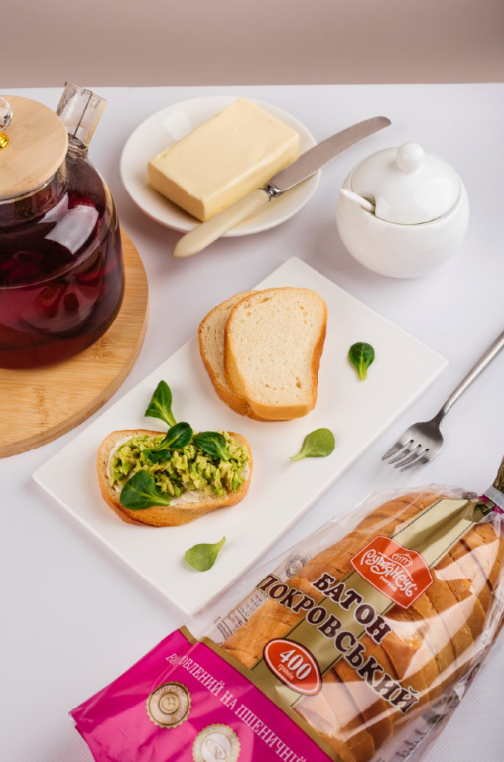
The purposeful use of natural fermentation mechanisms results in a product with high organoleptic qualities. The Pokrovskyi loaf features a regular shape, an even crust, and a well-developed volume. Its clean, multi-faceted aroma with light fermentation notes and a delicate spicy accent perfectly complements a harmonious taste without excessive acidity and with a lingering pleasant aftertaste. An elastic and resilient crumb with even porosity confirms that the recipe features of this loaf are technologically sound and refined to perfection.